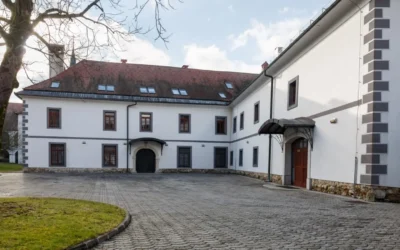
The Institute of Palaeobiology & Evolution is proud to announce a major future initiative: the development of the Museum of Evolution. This ambitious project will be housed in the historic Mekinje Monastery in Kamnik, Slovenia. The contrast between the ancient stone walls of the monastery and the millions of years of history contained within our fossil collections will create a unique space for reflection and learning.
Scroll Down
Institute of Paleobiology & Evolution (IPE)
News
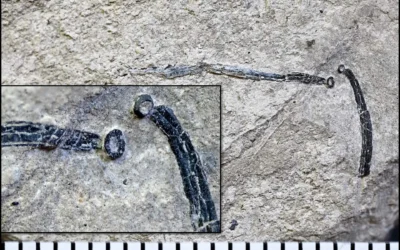
The first Sphenothallus from the Mesozoic
The Institute of Palaeobiology & Evolution is proud to announce a major future initiative: the development of the Museum of Evolution. This ambitious project will be housed in the historic Mekinje Monastery in Kamnik, Slovenia. The contrast between the ancient stone walls of the monastery and the millions of years of history contained within our fossil collections will create a unique space for reflection and learning.
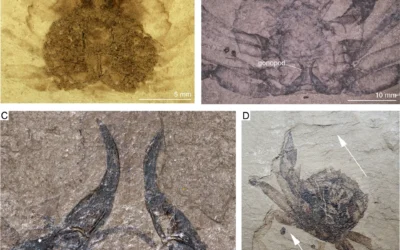
Ancient crab communities of the Central Paratethys
The Institute of Palaeobiology & Evolution is proud to announce a major future initiative: the development of the Museum of Evolution. This ambitious project will be housed in the historic Mekinje Monastery in Kamnik, Slovenia. The contrast between the ancient stone walls of the monastery and the millions of years of history contained within our fossil collections will create a unique space for reflection and learning.
The cretaceous reef crabs from Slovenia
The Institute of Palaeobiology & Evolution is proud to announce a major future initiative: the development of the Museum of Evolution. This ambitious project will be housed in the historic Mekinje Monastery in Kamnik, Slovenia. The contrast between the ancient stone walls of the monastery and the millions of years of history contained within our fossil collections will create a unique space for reflection and learning.
The Museum of Evolution: A New Cultural Hub in Kamnik
The Institute of Palaeobiology & Evolution is proud to announce a major future initiative: the development of the Museum of Evolution. This ambitious project will be housed in the historic Mekinje Monastery in Kamnik, Slovenia. The contrast between the ancient stone walls of the monastery and the millions of years of history contained within our fossil collections will create a unique space for reflection and learning.
Meet the Experts: The Faces of the IPE
Behind every discovery at the IPE is a dedicated team of specialists. Our Institute brings together a diverse group of researchers from various disciplines, including paleontology, evolutionary biology, stratigraphy, sedimentology, and paleoecology. This mix of expertise allows us to tackle complex scientific questions from multiple angles.
Academic Excellence: The IPE Scientific Journal
The Institute of Palaeobiology & Evolution is not only a place of discovery but also a producer and curator of scientific knowledge. A key part of our mission is the dissemination of high-quality research through our own scientific journal platform. This platform serves as a vital venue for original research articles, reviews, and methodological developments.
Fieldwork Diaries: Investigating Regional Biodiversity
At the heart of paleontology lies the field expedition. The IPE leads and participates in a wide range of national and international research projects focused on field-based investigations. Our researchers recently completed field expeditions aimed at investigating major evolutionary transitions and extinction events through active exploration.
Digital Fossils: Preserving Heritage in the 21st Century
The IPE maintains extensive paleontological and geological collections that are essential resources for research and education. These collections include fossil specimens, stratigraphic archives, and field documentation representing diverse geological periods. However, physical specimens are fragile and finite. To ensure their survival and accessibility, we have embarked on a massive digitization effort.
The Rhythms of Life: Biodiversity and Extinction
The history of life is not a steady climb but a series of dramatic shifts. At the IPE, we investigate these major evolutionary transitions to understand how life adapts—or fails to adapt—to a changing world. By looking at biodiversity patterns over millions of years, we can identify the factors that drive biological innovation.