
HERO IMAGE
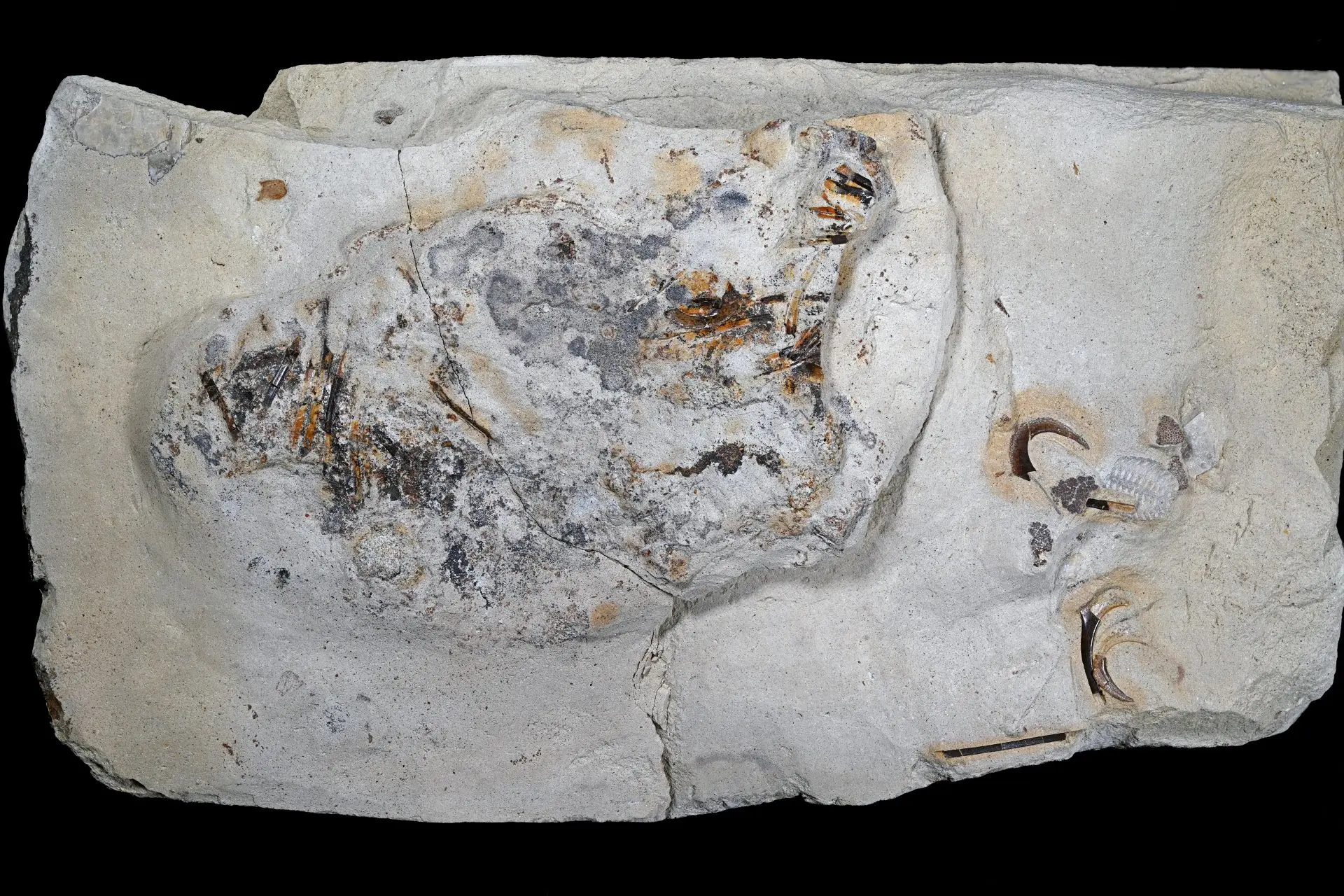
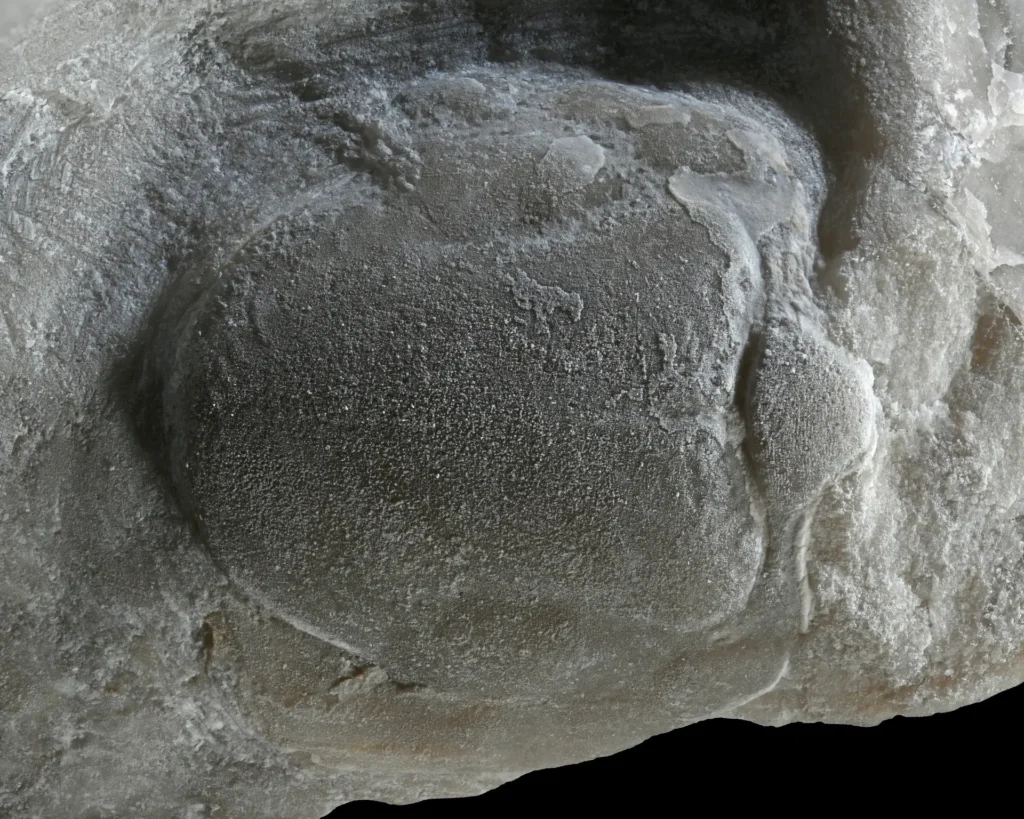
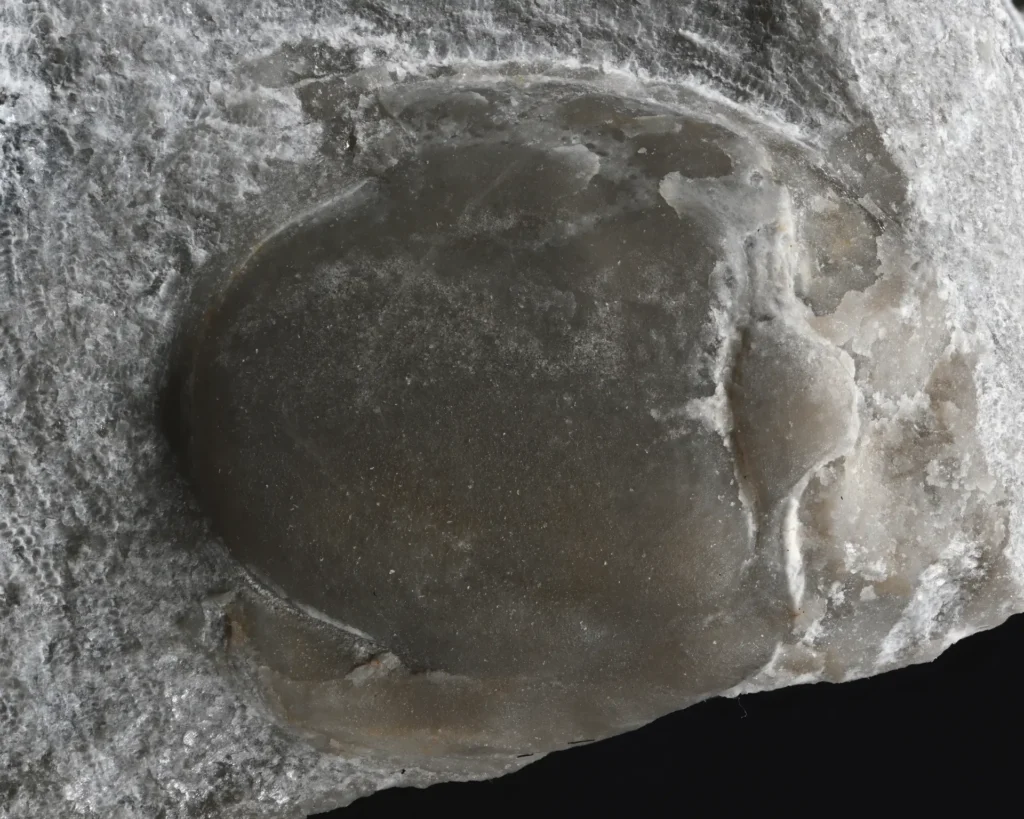
The fossil shield of Cretatrizocheles rodfeldmanni.
HIGHLIGHTS
A new hermit crab species from Lower Cretaceous reef limestone in southeastern Slovenia reveals that its lineage once inhabited shallow tropical seas, unlike its modern relatives, which are restricted mainly to deep-water environments.
overview
A small fossil discovered near Velika Strmica in southeastern Slovenia records a previously unknown hermit crab that lived during the Early Cretaceous, approximately 125–100 million years ago. The specimen was recovered from an Aptian–Albian reef-limestone block and represents a new species, Cretatrizocheles rodfeldmanni. It is assigned to the Pylochelidae, a distinctive family often described as “symmetrical hermit crabs” because their bodies are less asymmetrical than those of the familiar shell-dwelling forms.
The discovery expands the limited fossil record of the subfamily Trizochelinae. Fossil representatives are associated with shallow-marine reef environments of Late Jurassic and Early Cretaceous Europe, whereas their living relatives are now confined to considerably deeper marine settings. This ecological shift may reflect the effects of the Mesozoic Marine Revolution, during which increasingly effective predators transformed shallow seafloor ecosystems and drove some groups into deeper-water refuges.
Although known from only a single fossil shield preserved as part and counterpart, C. rodfeldmanni provides valuable evidence for the former diversity and habitat preferences of pylochelid hermit crabs. It also demonstrates how Slovenian Cretaceous reef deposits can illuminate major evolutionary changes in marine ecosystems.
REFERENCE
Gašparič, R., Fraaije, R.H.B., Jagt, J.W.M., Van Bakel, B.W.M., Hitij, T. & Wallaard, J. W. 2025: A new early Cretaceous pylochelid hermit crab from Slovenia suggests that Trizochelinae may also be linked to the Mesozoic Marine Revolution. Journal of Paleontology, 99(3), 623-627.
Read the publication on ResearchGate.