
HERO IMAGE
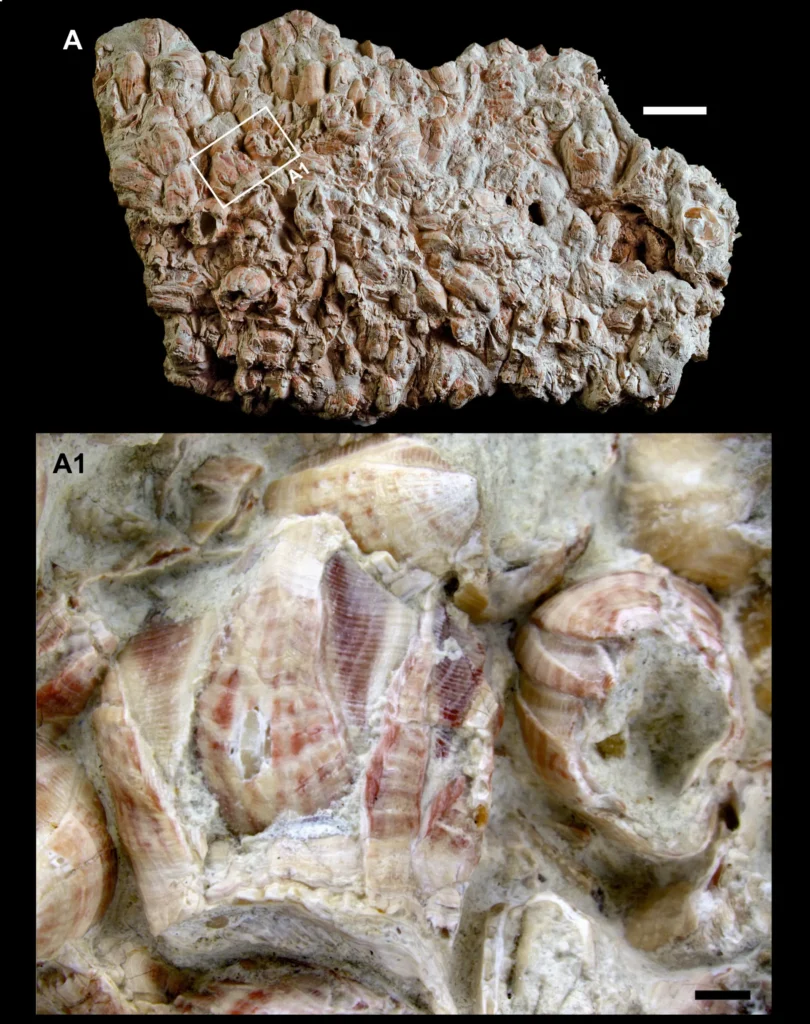
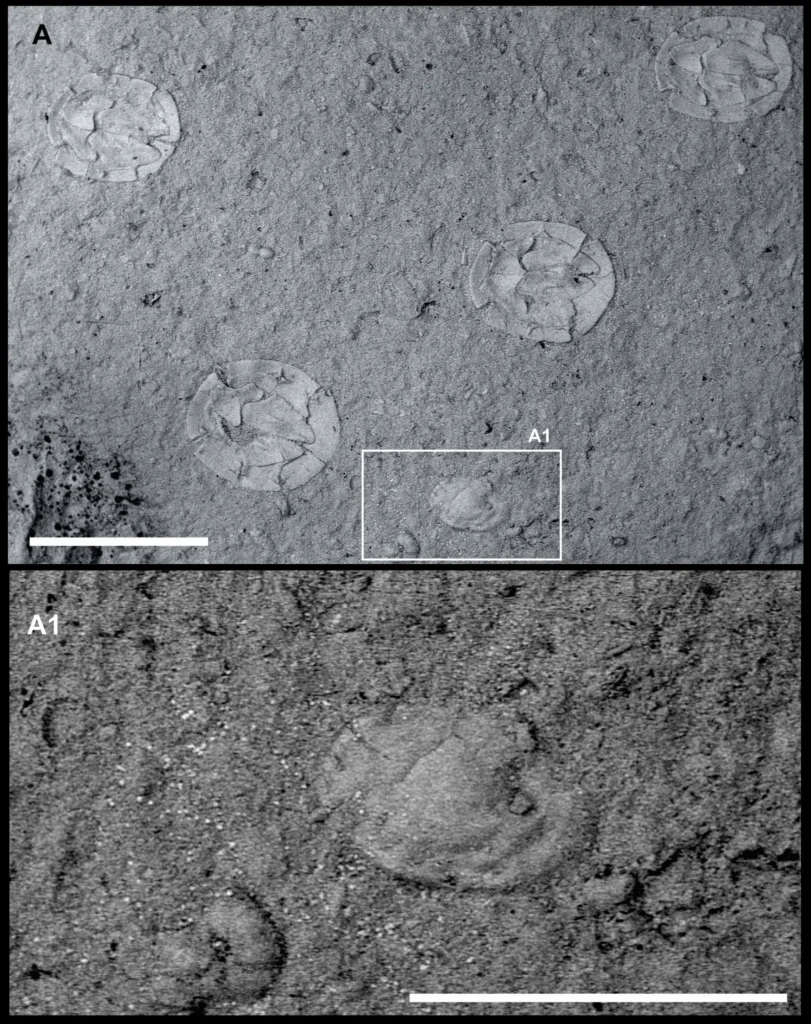
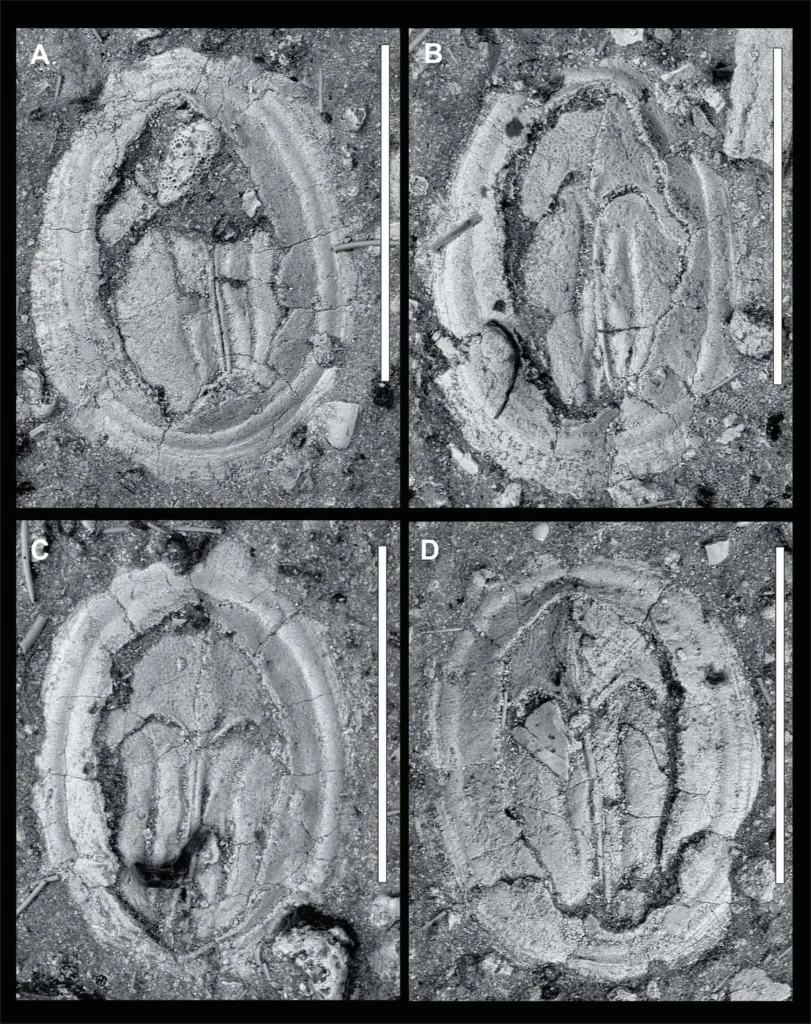
Photograph of the fossil slab showing clusters of juvenile barnacles, alongside close-up images of individual post-settlement specimens.
HIGHLIGHTS
A remarkable fossil assemblage from Slovenia preserves hundreds of juvenile barnacles that settled on the seafloor shortly after metamorphosis. This is the first known fossil Konservat-Lagerstätte preserving such an early stage in the life cycle of barnacles, offering a unique glimpse into the recruitment of ancient marine communities.
overview
Modern barnacles begin life as free-swimming larvae before permanently attaching to hard surfaces and transforming into sessile adults. This critical transition, known as settlement, is rarely captured in the fossil record because these tiny juvenile stages are extremely delicate and have little chance of being preserved.
An exceptional fossil assemblage from the Middle Miocene of Slovenia has changed this understanding. Hundreds of minute archaeobalanid barnacles are preserved immediately after settlement, representing the earliest benthic stage of their life cycle. Their outstanding preservation records an entire recruitment event, providing an unprecedented opportunity to study how ancient barnacle populations established themselves on the seafloor.
The discovery represents the first fossil Konservat-Lagerstätte known to preserve post-settlement stages of barnacles. Beyond documenting a unique moment in the life history of these crustaceans, the fossils provide new insights into the evolution of balanomorph barnacles. The Slovenian locality demonstrates that exceptionally preserved fossils can reveal not only extinct species but also the ecological processes that shaped ancient marine communities.
REFERENCE
Kočí, T., Gašparič, R., Buckeridge, J., Kočová Veselská, M. & Šoster, A. 2023: The first record of a Konservat-Lagerstätten in which early post-settlement stages of fossil archaeobalanids (Cirripedia: Balanomorpha) are preserved. Integrative Zoology.
Read the publication on ResearchGate.